



Super Bowl celebrations, FBI sting operations, and musical mania are the stars of This Week in History. Join me as we explore the days of this week in years past, from constitutional amendments to the New England Patriots Super Bowl comeback. As always, I’ll share some facts about these events as well as newspaper clips from when they happened to paint a full picture of the history that made us!
Super Bowl LI seemed to be just your typical championship game, at least until the 3rd quarter hit. On February 5th, 2017, the New England Patriots took on the Atlanta Falcons in a game that became historic. Going into the 3rd quarter, the Falcons were up 28-3, and the Patriots had returned with a new fervor. They quickly scored points on points, tying the game by the end of the fourth and sending the Super Bowl into its first overtime game. The Patriots achieved the largest comeback and ended the game winning 34-28.
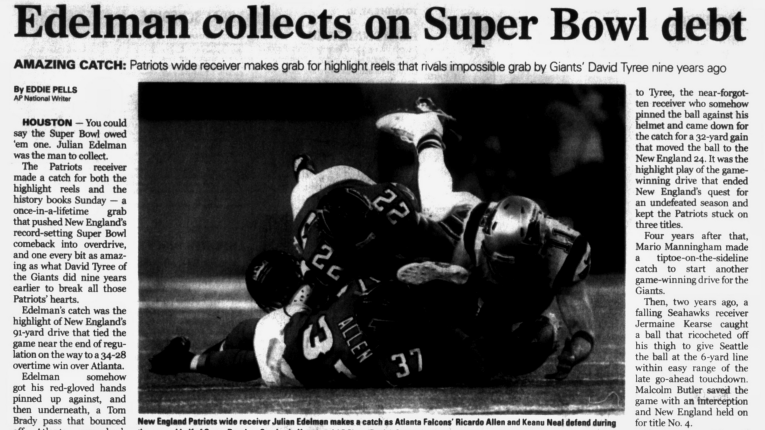
In the Quincy Herald Whig, published the day after the game, Reporter Eddie Wells credited Patriots receiver Julian Edelman as the key to their victory. He cites Edelman’s catch in the 91-yard drive to tie the game as a crucial play, and compares it to David Tyree’s iconic catch nine years prior. In Super Bowl history, the 2017 game was the first of only two games to go into overtime. The Patriots will hit the field again on February 8th against the Seattle Seahawks, and only time will tell if they can pull off a game as impressive as Super Bowl LI.
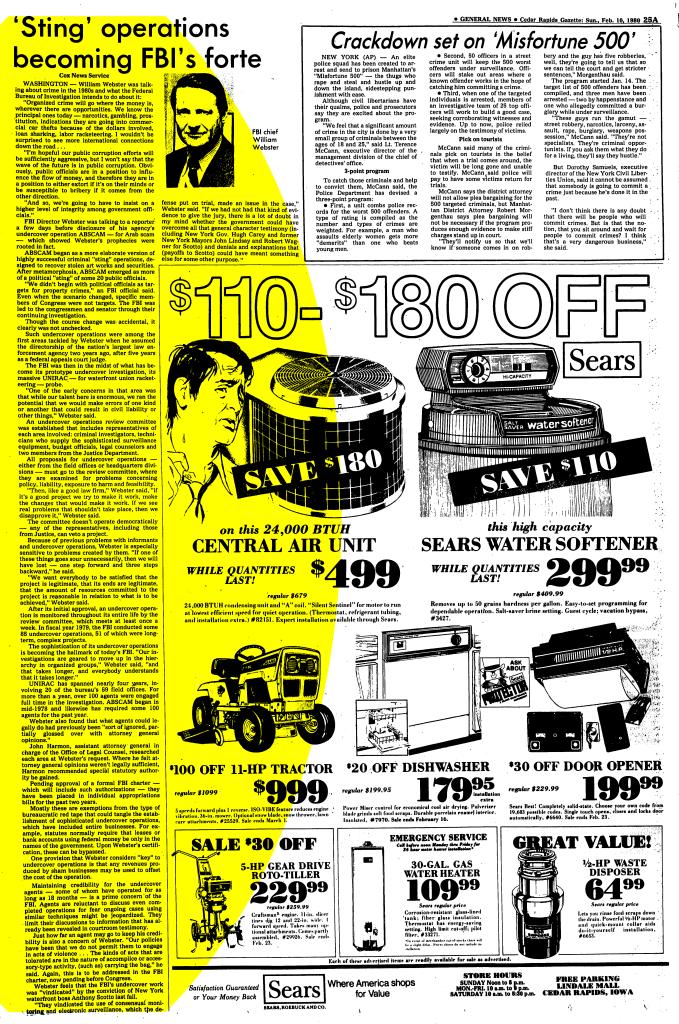
On February 2nd, 1980, an FBI sting operation was revealed to the public nearly 2 years into the making. The operation, nicknamed and most commonly known as ABSCAM, was an FBI-led investigation into organized crime that implicated many political figures. Agents posing as fake Middle Eastern investors lured politicians into taking bribes from the (fake) investment company. After catching and gathering evidence of the individuals accepting bribes, the operation was revealed to the public, and the involved political figures were put on trial. ABSCAM received conflicting reactions from the public. On one hand, many were praising the FBI for their findings. In The Gazette, one reporter calls sting operations the FBI’s Forte, applauding ABSCAM as one of many successful sting operations the department had been executing to uncover criminal organizations. The article details the process used by the FBI to create the ‘sophisticated’ operations that they believed were a hallmark of the department. In contrast, the revelation of the ABSCAM operation raised questions about the ethics of entrapment in federal investigations. By the end of the trials, multiple congressmen, senators, and local officials were convicted of taking bribes, ending their political careers.
(1945 – 1980s) Hello, Goodbye: The Beatles Visit the US, 1964
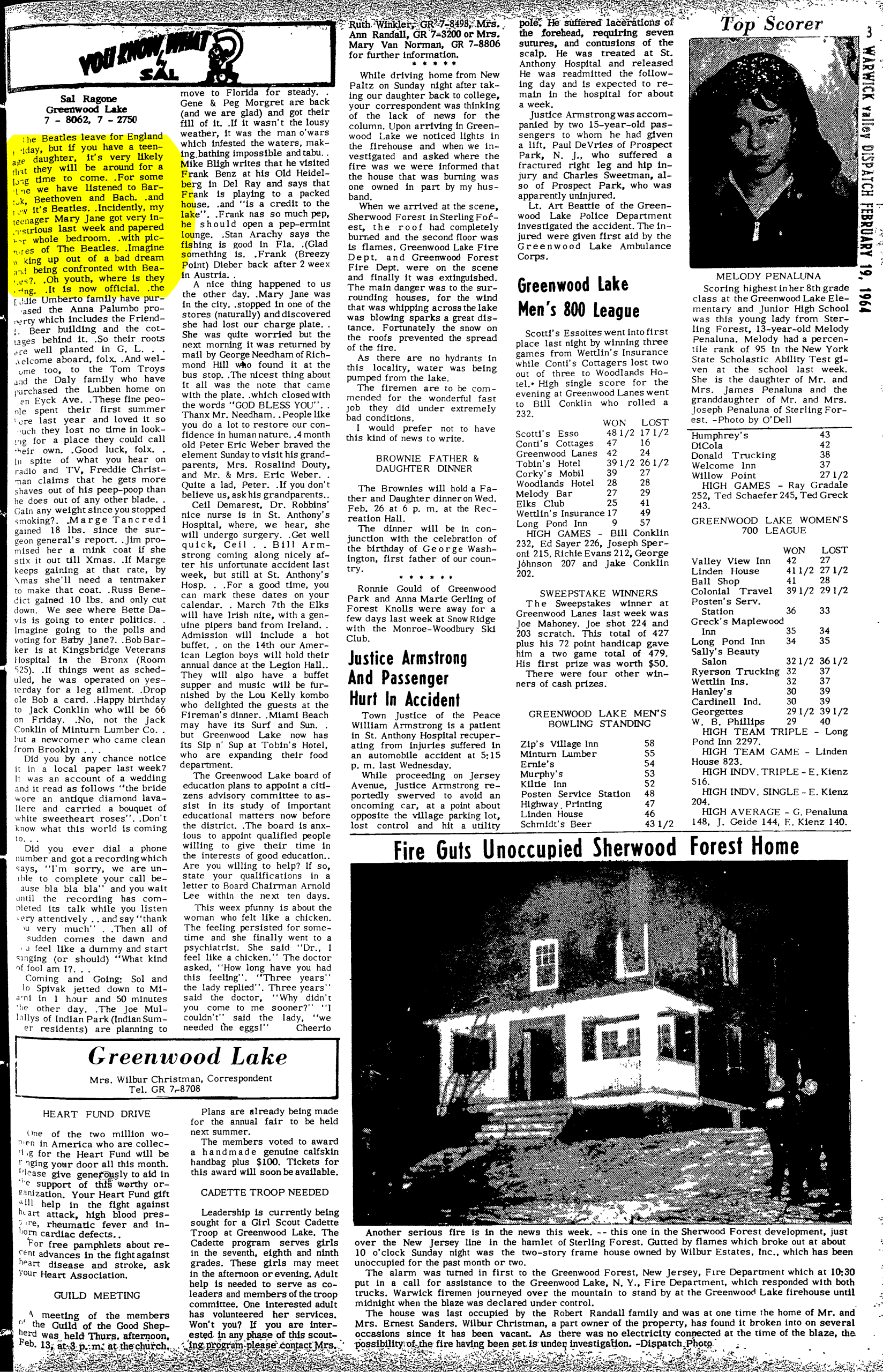
If you were a teenager in the mid 1960s, odds are you remember or were a part of Beatlemania. The Beatles, a British band, took the world by storm, becoming hugely popular, especially among teenage audiences. While already growing in popularity, their visit to the United States in February of 1964 really skyrocketed their immense success among American audiences. The group made their first trip to the United States on February 7th, 1964, landing in New York City, where they were greeted by a crowd of over 3000 screaming fans. They spent their trip stateside making appearances on the Ed Sullivan show and playing concerts on the East Coast. By the time they left, Beatlemania had taken over the lives of many teenage fans. In the Warwick Valley Dispatch, columnist Sal Ragone reports that his teenage daughter had already covered the walls of her bedroom with images of the band, as did many other fans. He empathized with other parents, assuring them that while the Beatles were leaving the country, their music was undoubtedly going to be everywhere for a while.
Beatlemania is especially interesting to me because it resembles the teenage experience that continues to repeat itself. The biggest example I can think of is the boyband fever of the 2010s, when the band One Direction was popular. Like during the 1960’s, teenagers became obsessed with the band, covering their walls in posters and playing their music constantly. These are just a few of many examples of musical groups becoming the center of cultural movements, specifically within youth culture.
Woodrow Wilson, the 28th President of the United States, passed away on February 3, 1924. He is best remembered for his significant achievements during his presidency as well as his health struggles in his second term. Wilson led the country through World War I and played a crucial role in guiding the Allies to victory. It was also during his presidency that the 19th Amendment was passed and ratified, granting women the right to vote. In 1919, he was awarded the Nobel Peace Prize for his efforts in founding the League of Nations.
Despite his successes, Wilson’s presidency was marked by challenges, specifically after he suffered a stroke in his second term. Although he survived the stroke, it left him partially paralyzed and impacted his ability to govern effectively. His medical condition was largely kept hidden from the public, and his wife, Edith Wilson, took on some presidential duties that he could no longer fulfill. This health decline ultimately contributed to his death from another stroke in 1924. After his passing, Wilson was remembered fondly, with one writer in the Adair County News referring to him as the “greatest man this country has ever produced,” who “lost his life in his endeavors to bring lasting peace to the world.”
(1824 – 1914) One Step Forward: 15th Amendment Ratified, 1870
The last historical event I want to highlight this week is the ratification of the 15th Amendment. Under the administration of Ulysses S. Grant, the amendment was added to prohibit voting discrimination based on race, color, or previous condition of servitude. By February 2nd, newspapers like the Cazenovia Republican were reporting that the matter of its ratification was largely settled, with the official act coming the next day. Though the 15th Amendment was ratified on February 3, 1870, the battle for suffrage was far from over. Many states skirted the law by implementing barriers to voting, such as literacy tests and poll taxes, which targeted minority groups and made it harder for them to vote. These practices were outlawed nearly a hundred years later with the Voting Rights Act of 1965. It wasn’t until 1920 that women’s suffrage was granted with the 19th Amendment. Despite the battle for voting rights not fully ending, the 15th Amendment was a huge step in the suffrage movement.
Join me again next week to discover more of history’s hidden gems and timeless tales.
Explore the “Read All About It” archives to read stories that spotlight our partners and their communities, announcements from our team, updates on current projects, and so much more. Discover articles about engagement, outreach, primary sources, community, digitization, education, and other topics of interest. Delve into the happenings in this week in history and take a deep dive into the events and people who helped shape our communities, our nation, and the world.
Hear Ye, Hear Ye, READ ALL ABOUT IT!
Advantage Archives works to build strong, community-based partnerships to provide free online access to local history, making it discoverable and easily accessible to anyone, anywhere, at any time, on any device. This allows communities to understand and connect to their past in a meaningful way. Through the Community History Archive search platform, we provide the community with the means to explore, discover, learn from, connect with, and share the stories of the people, places, and events that shaped their community.
The Community History Archives are intended to serve as a “portal to the past”, allowing local primary source documents to give an accounting of history as told by the individuals that witnessed it. Advantage Archives guiding principals center around building strong community-based partnerships, which is why we enter into them with the intent of shouldering our fair share, and taking the burden off of the community for the ongoing costs associated with storage, hosting, development, and maintenance of the Community’s History Archive. We are an active participant in the community’s efforts to make their collective history more accessible. The Community History Archives are maintained for free by Advantage and do not require a subscription, seat license, annual support contract, or any other ongoing costs or expenses to the institution or members of the community.
If you would like to see more local history online, please contact your local library, newspaper publisher, genealogical society, historical society, or educational institution, and encourage them to learn more about creating a Community History Archive or have them contact Advantage Archives at (855) 303-2727